

You Could Be Right About Valuations But Wrong About Prices
Sam Ro 1 week ago
MarketsBroad U.S. Equity ETFsEquitiesOpinion
Five years ago, on October 14, I launched TKer, the newsletter that tells the story of how the stock market usually goes up. That first year was highlighted by a bear market as the Federal Reserve went to war against
Five years ago, on October 14, I launched TKer, the newsletter that tells the story of how the stock market usually goes up.
That first year was highlighted by a bear market as the Federal Reserve went to war against inflation. The S&P 500 fell 19%.
Year two brought an impressive stock market rebound. It began two days after the current bull market started. That year, the S&P ended up 21% higher despite lingering uncertainty.
Year three extended the rally, with the S&P surging an incredible 35%. Interestingly, the average annualized return since TKer’s launch up to that point was an extraordinarily average 9%.
Year four brought political upheaval after the U.S. presidential election, trade wars sparked by new tariffs, volatility in interest rates and currency markets, heightened geopolitical tensions, threats to Federal Reserve independence, and a government shutdown, which added to concerns about the quality of economic data. Yet the stock market repeatedly set new all-time highs, climbing 14% during the period — arguably because earnings were resilient.
📈 Year five saw many of year four’s challenges linger. But one key difference was that the forward price-to-earnings (P/E) ratio was unusually elevated at close to 23x, the highest level since 2020.
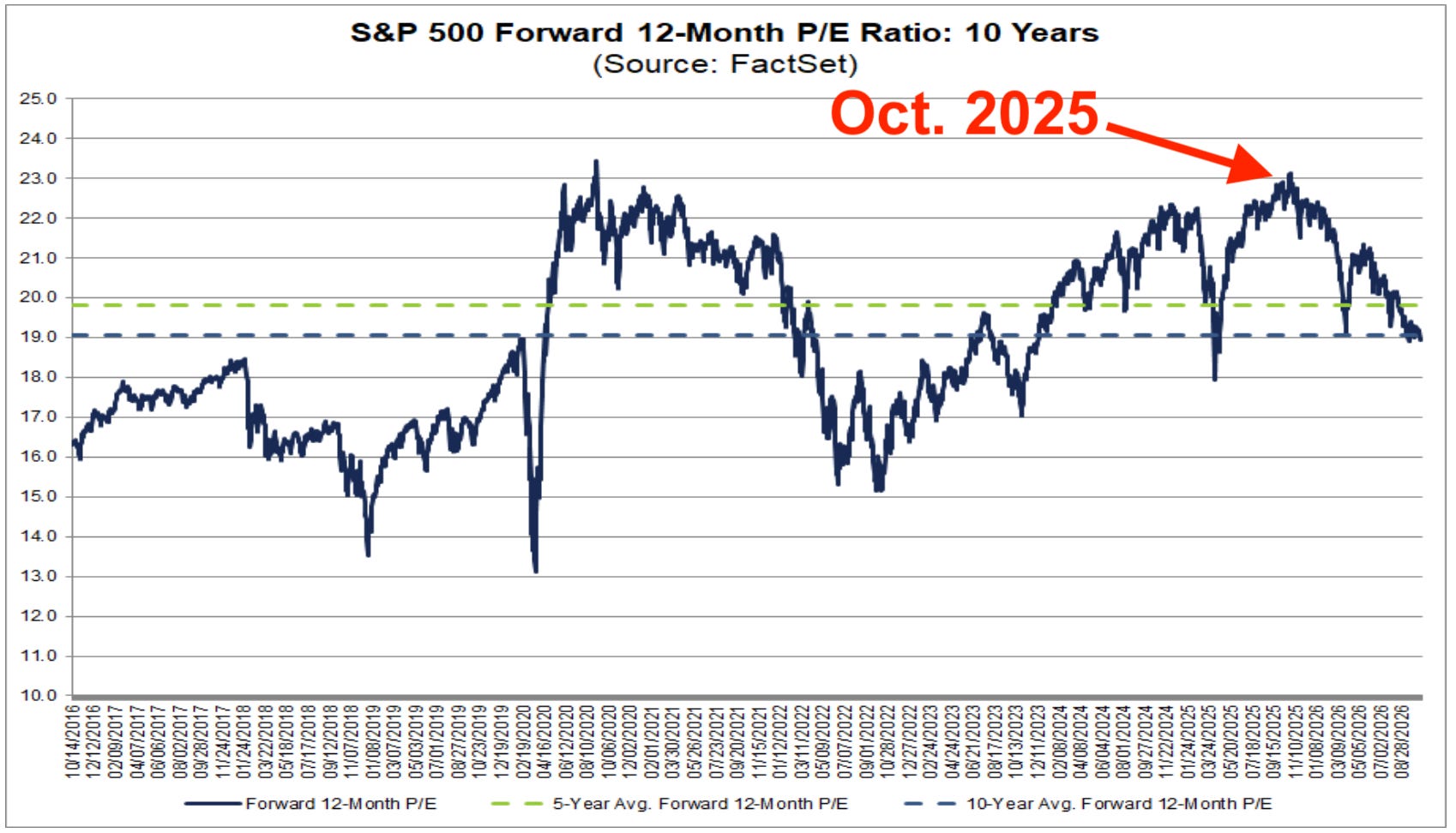
In other words, stocks looked expensive when I published my previous annual update.
But as we’ve discussed for years, elevated valuations don’t mean prices are likely to fall soon. We were reminded of this in TKer’s fifth year as the S&P 500 climbed 16%.
TKer Stock Market Truth No. 6 📜
About a year ago, some of Wall Street’s most prominent strategists made a bold prediction: High valuations were justified, and they’ll remain elevated in 2026 as stock prices go higher.
Others argued valuations were a headwind and at risk of contracting, capping price returns.
I’ve written before that P/E ratio forecasts are where Wall Street’s year-end price target calculations often go wrong, mostly because the direction of the ratio is hard to predict over short periods.
But ten months into 2026, P/E ratios have been contracting. Does that mean the bulls were wrong and the skeptics were right?
Sort of, but also not really.
One of this year’s defining market stories has been the aggressive, ongoing upward revisions to earnings forecasts, which have pulled P/E ratios down. This occurred even as stock prices trended higher. Fractions 101: If the denominator (E) rises faster than the numerator (P), then the P/E falls.
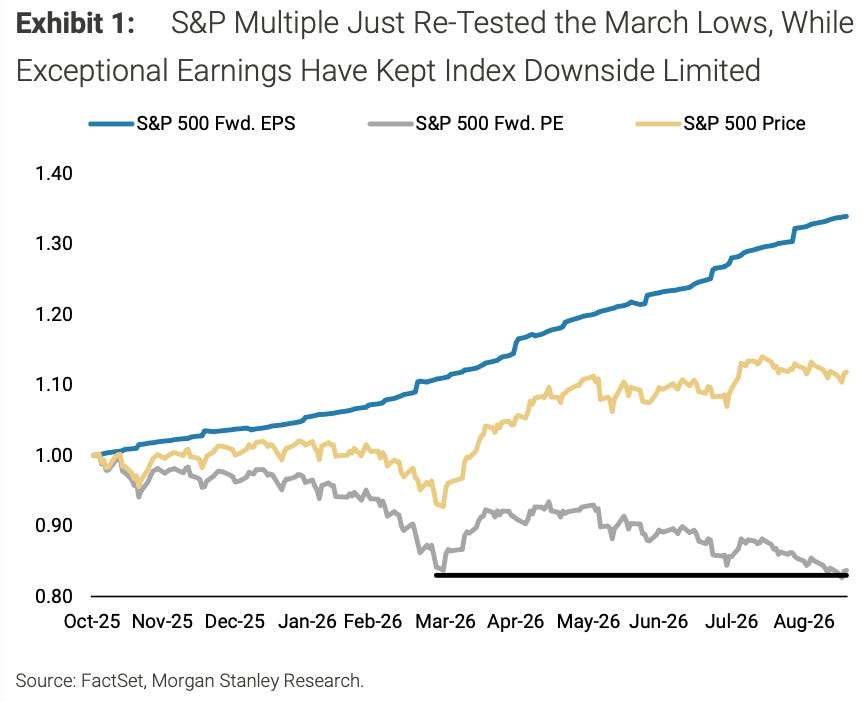
This brings us to TKer Stock Market Truth No. 6:
6. Valuations won’t tell you much about next year
There are many valuation methods that’ll help you estimate whether a stock or stock market is cheap or expensive. We won’t go through all of those here.
While valuation methods may tell you something about long-term returns, most tell you almost nothing about where prices are headed in the next 12 months. Over short periods like this, expensive things can get more expensive and cheap things can get cheaper.
It’s worth noting that prices can be cheap or expensive for extended periods of time. In fact, some folks would argue valuations are not mean-reverting.
Expensive stocks often get more expensive. Cheap stocks often get cheaper.
And sometimes prices fall as stocks get more expensive, and prices rise as they get cheaper.
Trading the stock market can be hard. You could’ve been absolutely right if you predicted P/E ratios would contract. But if you used that information to sell stocks, you might’ve made a huge mistake.
Benzinga Disclaimer: This article is from an unpaid external contributor. It does not represent Benzinga’s reporting and has not been edited for content or accuracy.