


Meet the New Boss, Same as The Old Boss’: James Thorne Says Kevin Warsh Failed His First Fed Test After Rate Hike, Warns Another Increase in October
Radhika Anilkumar Nadig 1 month ago
EconomicsGovernmentCommoditiesFederal ReserveMacro Economic EventsMacro Notification
James Thorne said Fed Chair Kevin Warsh failed the test, as Wednesday's rate hike shows no real policy change.
James Thorne, Chief Market Strategist at Wellington Altus, said Federal Reserve Chair Kevin Warsh has failed the test, as his handling of Wednesday’s rate hike shows the Fed’s underlying policy approach hasn’t changed under new leadership.
Following the Same Playbook
Thorne said Warsh’s Jackson Hole remarks, the interest rate hike, and the press conference all point to the same conclusion: that Warsh will keep reacting to “inflation headlines, prediction-market pricing, and superficial strength in aggregate data.”
“Meet the new boss, same as the old boss,” Thorne added in a post on X on Thursday.
Warsh: Too Many Red Flags
— James E. Thorne (@DrJStrategy) September 18, 2026
Kevin Warsh has failed the test, and investors should pay attention now that he is Fed chairman.
Meet the new boss, same as the old boss.
His Jackson Hole performance, the Fed’s subsequent rate hike and yesterday’s Q&A are not isolated slips. They… https://t.co/LuIYU7lEJV
The Fed raised its benchmark rate 25 basis points Wednesday to a range of 3.75%-4.00%, its first increase since 2023, with all 12 voting members backing the move.
‘The Fed Cannot Create Oil Supply’
Warsh’s treatment of the Iran-driven oil shock is the clearest sign of the problem, Thorne said, arguing Warsh never acknowledged that an oil supply shock functions as “a tax on growth.”
“The Fed cannot create oil supply, secure shipping routes or end a war with higher interest rates,” he said, warning that hiking into the shock “risks turning a temporary price-level increase into recession.”
He called Warsh a “big hat, no cattle,” and predicted another rate hike is likely coming in October.
Iran’s Parliament Speaker Mohammad Bagher Ghalibaf mocked the Federal Reserve’s rate hike, saying it’s Tehran, not Washington, that controls the main driver of inflation.
U.S. producer prices rose 5.4% year-over-year in August, up from 4.8% in July, driven largely by higher energy costs tied to the Iran war.
Oil Cools After Fed Hike
Brent Crude prices, which hovered above $109 last week, have retreated to trade at $102.55 at the time of writing.
WTI futures for October delivery, expiring Sept. 22, were down 1.78% to $100.10.
Price Action: United States Brent Oil Fund (NYSE:BNO) closed 1.30% lower on Thursday and dipped 0.66% to $60.51 in pre-market trading on Friday. ProShares Ultra Bloomberg Crude Oil (NYSE:UCO) closed 0.08% and fell 0.44% in early trading. Meanwhile, United States Oil Fund (NYSE:USO) fell 0.55% on Thursday and lost 0.71% in pre-market trading.
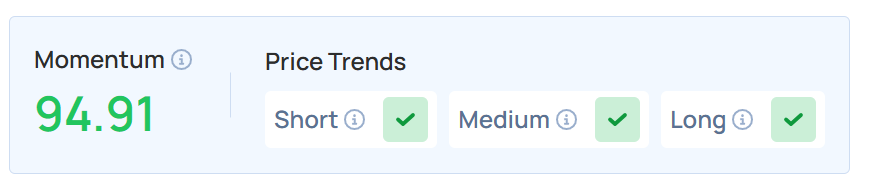
Benzinga edge rankings indicate Brent Crude Oil Fund has a Momentum score in the 94th percentile and a positive price trend in the short, medium, and long term.
See More: Top Momentum Stocks
Disclaimer: This content was partially produced with the help of AI tools and was reviewed and published by Benzinga editors.
Image via Shutterstock